Research and Development (R&D) in mechanical engineering is the systematic, empirical investigation and formulation of new physical principles, material behaviors, and mechanical systems aimed at creating innovative, viable products. This critical process is fundamentally required during the earliest, pre-conceptual stages of a product’s lifecycle, acting as the scientific bridge that transforms abstract market needs into mathematically and physically sound engineering foundations. Fortunately, modern engineers and designers can now leverage an array of powerful, free Artificial Intelligence tools to conduct rapid ideation, conceptual validation, and hypothesis generation before ever committing to expensive physical testing.
The Indispensable Importance of R&D in Engineering Projects
To fully grasp how artificial intelligence can multiply the efficacy of Research and Development by a factor of five, one must first understand why R&D is the uncompromising bedrock of any successful engineering project. In the realm of mechanical engineering, product development is rarely a straightforward path from an idea to a finished good. It is an intricate web of physical constraints, economic realities, and safety requirements. R&D is the protective shield that guards an engineering firm against catastrophic failure, both physically and financially.

The importance of R&D begins with fundamental risk mitigation. When an engineering team sets out to design a novel turbine blade, a high-efficiency heat exchanger, or a next-generation automotive suspension system, they are stepping into the unknown. Without a robust R&D phase, engineers rely on assumptions—and in mechanical engineering, unverified assumptions lead to mechanical fatigue, thermal failure, and system collapse. R&D systematically eliminates these unknowns through theoretical modeling, literature reviews, and empirical testing. It replaces guesswork with quantifiable data, ensuring that the foundational physics of a proposed solution are actually sound before millions of dollars are spent on tooling and production.
Furthermore, R&D is the primary driver of market competitiveness and technological superiority. In a globalized economy, simply building a product that works is no longer sufficient; the product must be lighter, stronger, cheaper, or more efficient than the competition. The R&D department is where these critical differentiators are forged. It is where engineers discover that substituting a traditional steel alloy with a novel carbon-composite matrix will reduce weight by thirty percent while maintaining tensile strength. This level of innovation cannot be stumbled upon during routine drafting; it requires dedicated, focused research.
Economic viability is another pillar of R&D’s importance. While R&D itself requires a budget, it is an investment that pays exponential dividends by preventing downstream errors. The cost of altering a design during the R&D phase is infinitesimally small—often just the cost of an engineer’s time and computer power. However, the cost of discovering a fundamental flaw during the manufacturing phase or, worse, after the product has reached the consumer, can bankrupt a company. Therefore, comprehensive R&D ensures long-term profitability by catching foundational errors when they are cheapest to fix. Finally, R&D ensures stringent regulatory compliance and safety. Mechanical systems often interact intimately with human lives, necessitating rigorous adherence to standards set by organizations like ISO, ASME, or ASTM. R&D provides the documented, empirical evidence required to prove that a design meets or exceeds these vital safety thresholds.
Why R&D is Crucial Before the Design Process
A common misconception in product development is that engineering begins when a designer opens a Computer-Aided Design (CAD) software and starts sketching geometry. In reality, proceeding to the design process without prior R&D is akin to building a house without a blueprint or a soil survey. R&D must strictly precede the formal design phase because it defines the absolute boundaries of what is physically and mathematically possible. This preparatory phase is often referred to as “Front-End Loading,” and it dictates the success of everything that follows.
Before a single line is drawn in CAD, the R&D team must conduct extensive feasibility studies. These studies determine if the proposed concept violates any laws of thermodynamics, fluid dynamics, or solid mechanics. For instance, if a company wants to design a new drone, the design team cannot simply model a sleek fuselage. First, R&D must determine the required thrust-to-weight ratio, battery energy density limitations, and aerodynamic drag coefficients. Only after R&D has defined this strict “envelope of possibilities” can the designers begin their work.

If designers operate without these R&D-defined boundaries, they run the high risk of designing “unobtainium”—a visually stunning product that is physically impossible to manufacture or operate.
Moreover, R&D is crucial before design because it dictates material selection, which in turn dictates the geometry. A component designed to be cast from aluminum will have vastly different wall thicknesses, fillet radii, and draft angles than a component designed to be 3D printed from titanium. The R&D phase involves researching material properties—such as fatigue limits, thermal expansion coefficients, and galvanic corrosion risks—to select the optimal material for the application. Once the material is defined by R&D, the design process can move forward with accurate parameters.
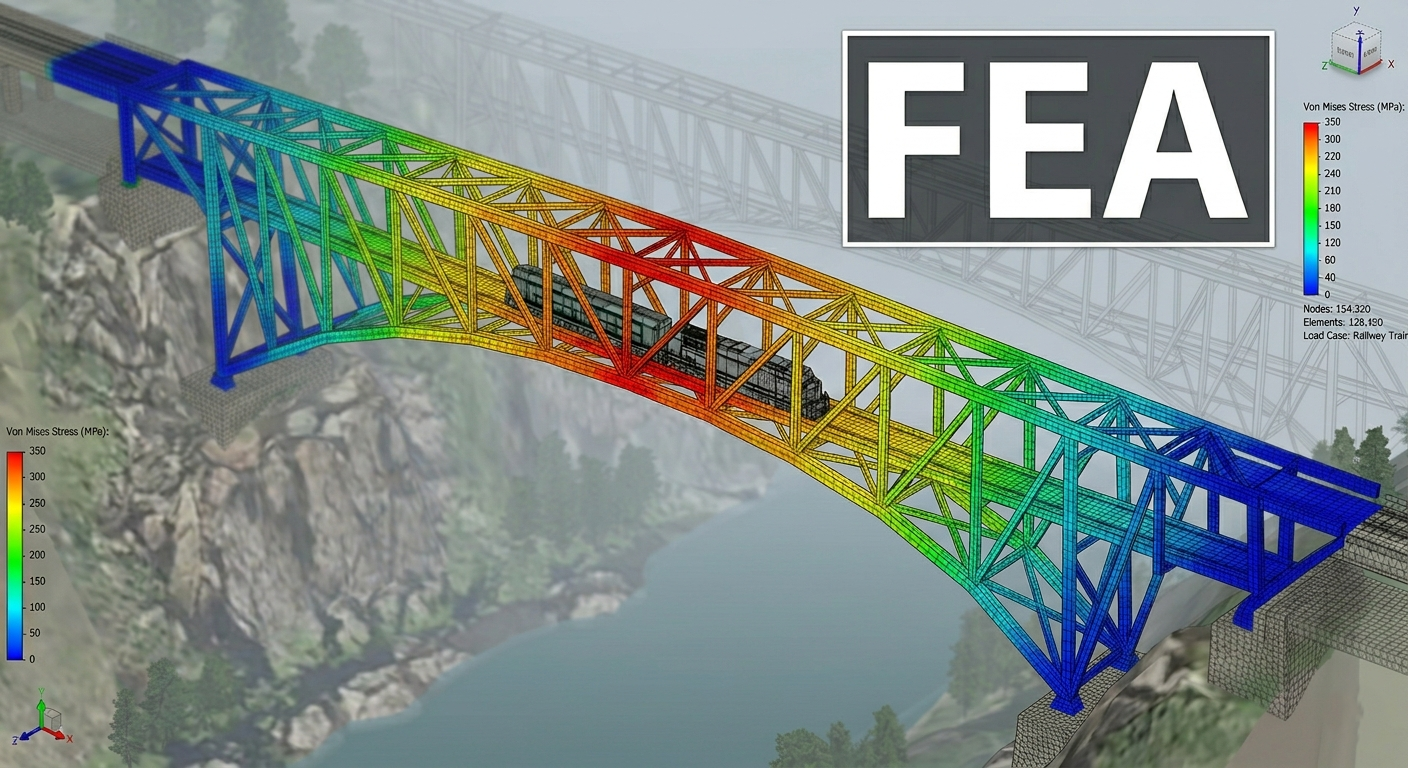
Additionally, pre-design R&D establishes the mathematical boundary conditions that will later be used in finite element analysis (FEA) and computational fluid dynamics (CFD). It is during this phase that engineers calculate the maximum expected loads, thermal gradients, and harmonic frequencies the product will face in its operating environment. By establishing these hard numbers before design begins, the design engineers have clear, quantifiable targets to hit, drastically reducing the number of design revisions required later in the project lifecycle.
The Role of R&D in Prototyping
Once the theoretical groundwork has been laid and the initial designs are drafted, the project moves into the physical realm: prototyping. Here, R&D transitions from theoretical research to applied empirical testing. R&D and prototyping share a symbiotic relationship; prototyping is the physical manifestation of R&D’s hypotheses, and R&D provides the analytical framework to make sense of the prototype’s performance.
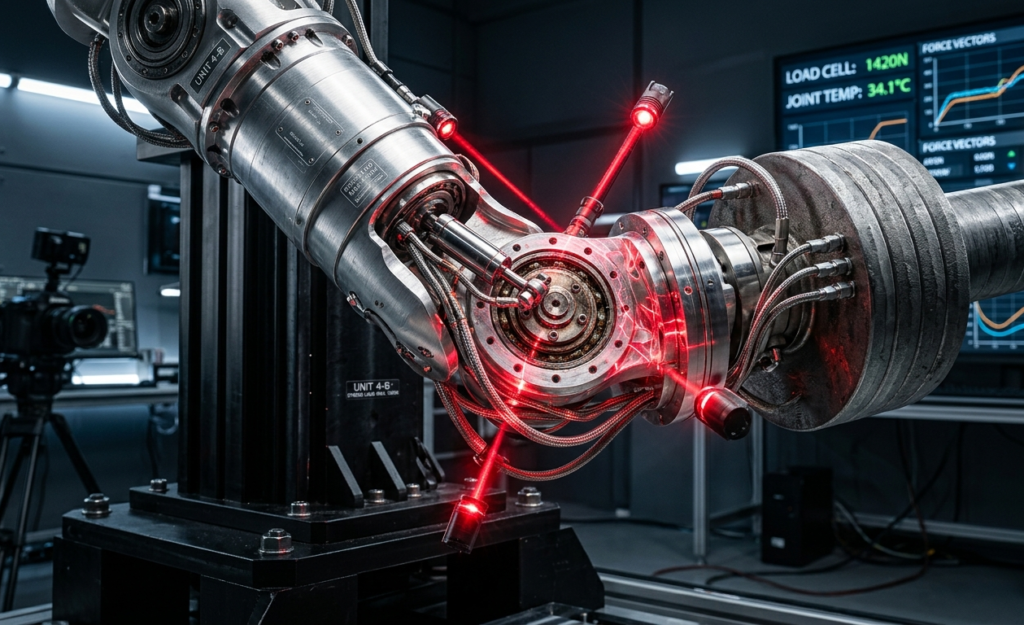
R&D is profoundly useful for prototyping because it dictates what needs to be tested and how to measure it. A prototype is not merely a rough draft of the final product; it is a dedicated data-acquisition tool. Before a prototype is built, the R&D team establishes a rigorous Design of Experiments (DoE). They determine exactly where to place strain gauges, thermocouples, and accelerometers on the physical model to capture the most critical performance data. Without R&D guiding this process, prototyping becomes a disorganized exercise in trial and error, yielding anecdotal observations rather than actionable engineering data.
Furthermore, R&D is crucial for analyzing the inevitable failures that occur during prototyping. When a physical alpha-prototype shatters under a specific load, it is the R&D engineers who investigate the fracture mechanics. They analyze the grain structure of the broken part, compare the real-world failure point against the initial FEA predictions, and adjust the underlying mathematical models to reflect reality. This iterative loop—design, build, break, research, repeat—is the core engine of hardware development.
R&D also plays a vital role in scaling and simplification during the prototyping phase. Often, full-scale testing is prohibitively expensive. R&D allows engineers to design scaled-down prototypes and utilize the principles of dimensional analysis (such as the Reynolds number in fluid dynamics) to ensure that the behavior of the miniature prototype accurately reflects the behavior of the final, full-sized product. Through rigorous R&D protocols, prototyping is transformed from a chaotic building phase into a highly controlled scientific experiment that rapidly accelerates the path to a Minimum Viable Product (MVP).
Driving Efficiency: R&D in Manufacturing
The scope of Research and Development does not end once the product design is finalized; it is equally critical in the realm of manufacturing. Manufacturing R&D, often encompassed by the discipline of Design for Manufacturing and Assembly (DFMA), focuses not on the product itself, but on the complex processes required to build it at scale, with high precision, and at minimal cost.
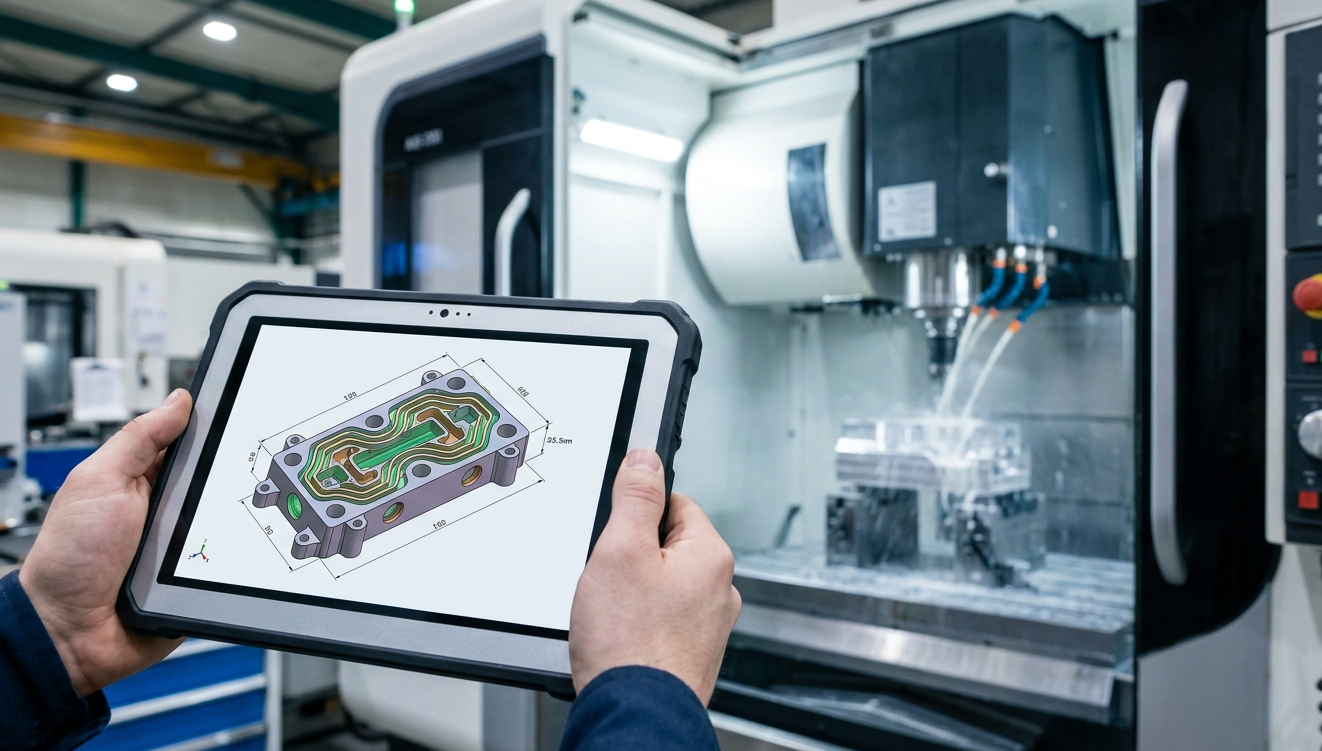
In manufacturing, R&D is required to optimize machining parameters, tooling design, and material flow. For example, if a component is to be mass-produced via computer numerical control (CNC) machining, R&D engineers will experiment with different cutting speeds, feed rates, and tool geometries to minimize cycle times while maximizing tool life and surface finish.
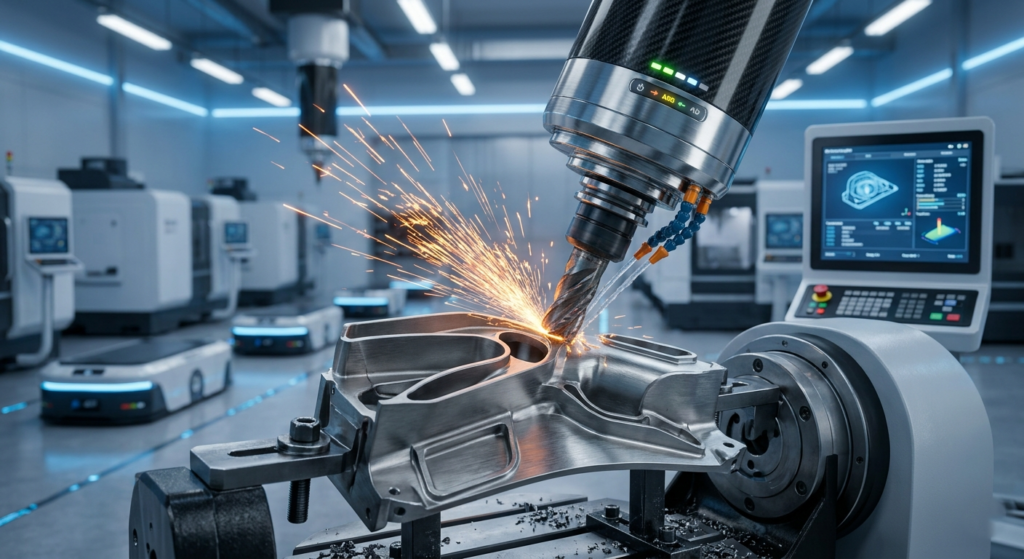
This kind of process R&D directly impacts the bottom line; shaving just five seconds off a machining cycle can save millions of dollars over a production run of hundreds of thousands of parts.
Similarly, in processes like plastic injection molding or metal casting, R&D is utilized to study the thermodynamic cooling rates of the material within the mold. By researching and simulating how a material shrinks and warps as it cools, manufacturing R&D engineers can design complex conformal cooling channels within the mold itself, preventing part deformation and drastically reducing the time required between production cycles.
Furthermore, modern manufacturing R&D is heavily focused on automation and quality control. Engineers research the implementation of machine vision systems, robotic kinematics, and automated non-destructive testing (NDT) methodologies. They develop algorithms that can detect microscopic flaws in a weld or geometric deviations in a machined part in real-time. By applying rigorous R&D to the factory floor, companies transition from reactive quality control (discarding bad parts) to proactive process control (ensuring bad parts are never made in the first place).
The Evolution and History of the R&D Process
To appreciate the modern pace of engineering, it is essential to look back at the history of R&D before the advent of digital technology. Historically, the process of Research and Development was defined by extreme labor intensity, manual calculation, and an unavoidable reliance on slow, physical trial and error.
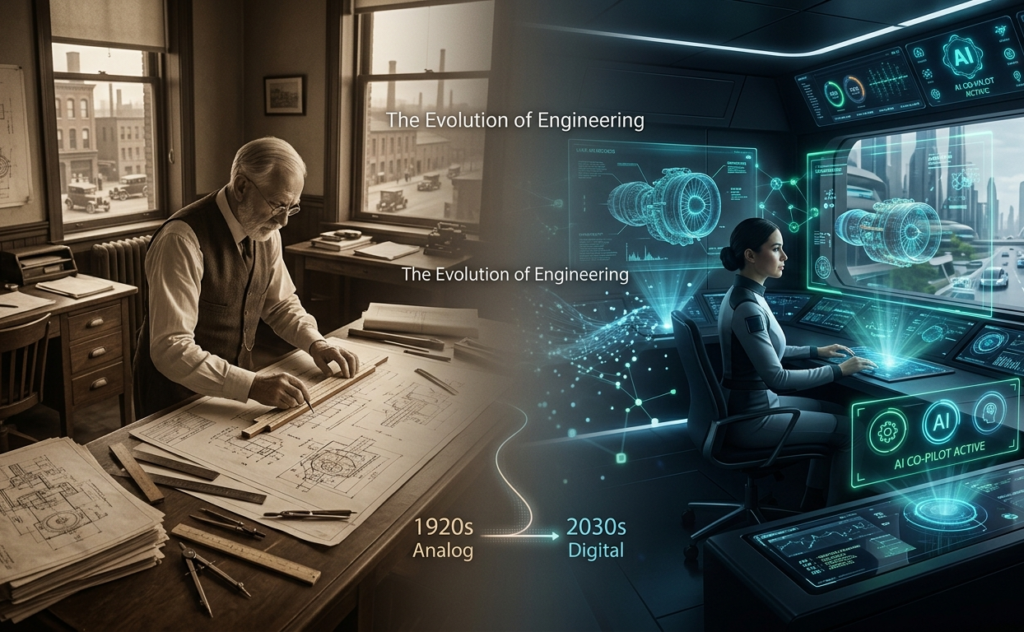
In the late 19th and early 20th centuries—the era of Thomas Edison, the Wright Brothers, and the early industrial revolution—R&D was a highly physical endeavor. Edison famously tested thousands of different materials, from bamboo to carbonized cotton, before finding a suitable filament for the incandescent lightbulb. This “Edisonian approach” was effective but wildly inefficient, relying purely on brute-force physical testing rather than predictive theoretical modeling.
As the 20th century progressed, the engineering drafting room became the epicenter of R&D. Rooms were filled with hundreds of engineers and draftsmen hunched over large wooden tables, armed with slide rules, compasses, and reams of paper. Complex calculations for structural integrity or fluid dynamics—equations that a modern smartphone can solve in milliseconds—took teams of human “computers” weeks or months to solve by hand. Wind tunnel testing, an incredibly expensive and time-consuming process, was the only reliable way to gather aerodynamic data, as computational fluid dynamics did not yet exist. The cost of a mistake during this era was astronomical, as identifying a flaw required waiting weeks for a mathematical proof to be manually verified or a physical model to be constructed and tested.
In the late 20th century, the introduction of early mainframe computers and rudimentary CAD/CAE (Computer-Aided Engineering) software began to shift R&D from the physical to the digital. However, these early digital processes were still siloed and slow. Today, the R&D process has evolved into highly structured frameworks like the “Stage-Gate” process or “Agile Hardware Development.” These modern methodologies divide R&D into distinct phases—ideation, feasibility, development, testing, and launch—with strict data-driven criteria required to pass from one “gate” to the next. The digital revolution transformed R&D from a physical building exercise into a digital simulation exercise, setting the stage for the next massive leap: Artificial Intelligence.
How AI Boosts the R&D Process
Artificial Intelligence represents the most significant paradigm shift in Research and Development since the invention of the computer. AI does not merely digitize the R&D process; it fundamentally changes how engineering problems are approached, boosting output and efficiency by unprecedented multiples.
AI boosts R&D primarily by accelerating the discovery phase through advanced data processing and pattern recognition. Traditionally, an engineer beginning a new R&D project would spend weeks conducting a literature review, manually reading through hundreds of patents, academic papers, and historical test reports to understand the state-of-the-art. Today, Natural Language Processing (NLP) algorithms can ingest millions of documents in seconds, instantly summarizing the data, identifying technological white spaces, and highlighting previous failures that the team should avoid. This reduces the initial research phase from months to mere hours.
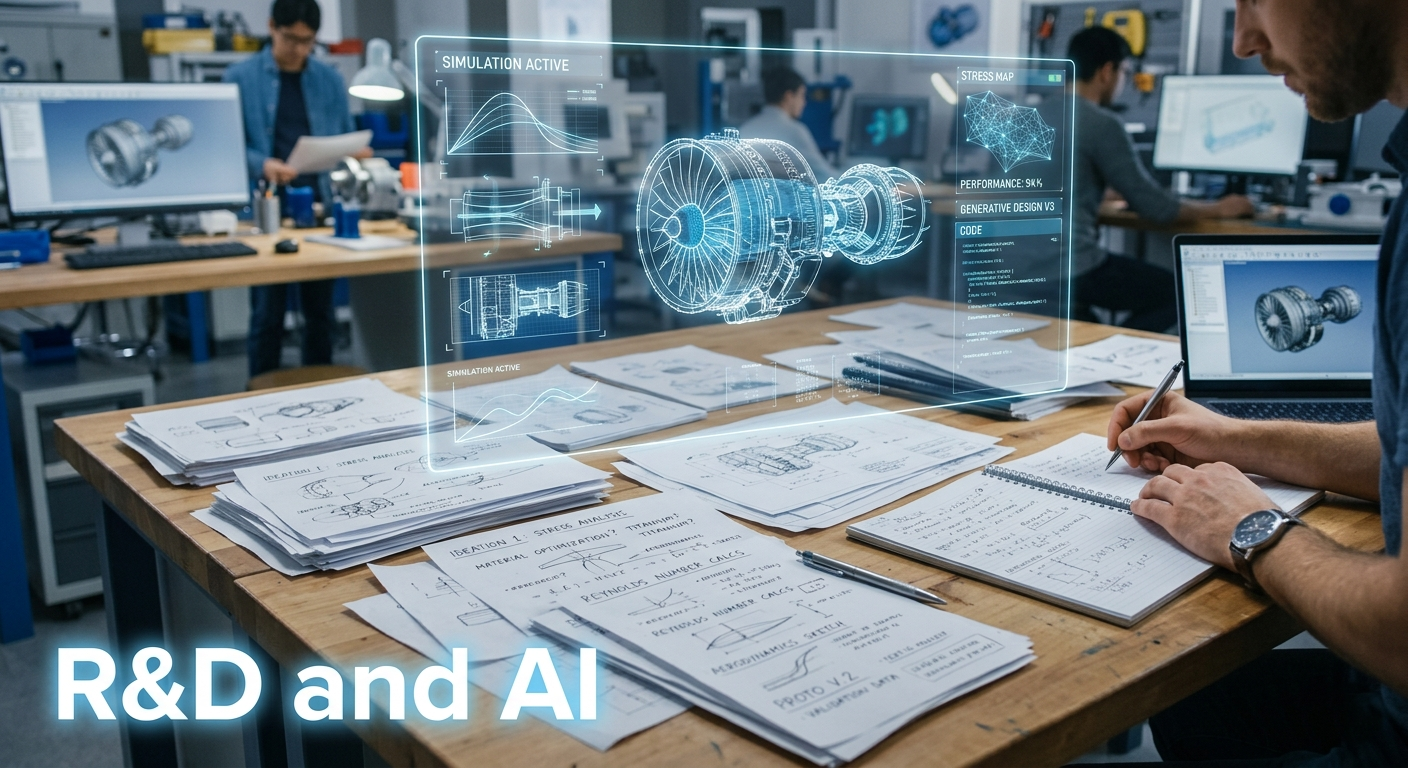
Furthermore, AI drastically enhances computational engineering through “Surrogate Modeling” and “Generative Design.” In traditional simulation (FEA/CFD), rendering a complex physics problem can take a supercomputer days to solve. AI can be trained on thousands of previous simulations to create a surrogate model—a neural network that instantly predicts the outcome of a simulation with high accuracy without having to solve the underlying differential equations step-by-step. This allows engineers to test thousands of design variations in the time it previously took to test one.
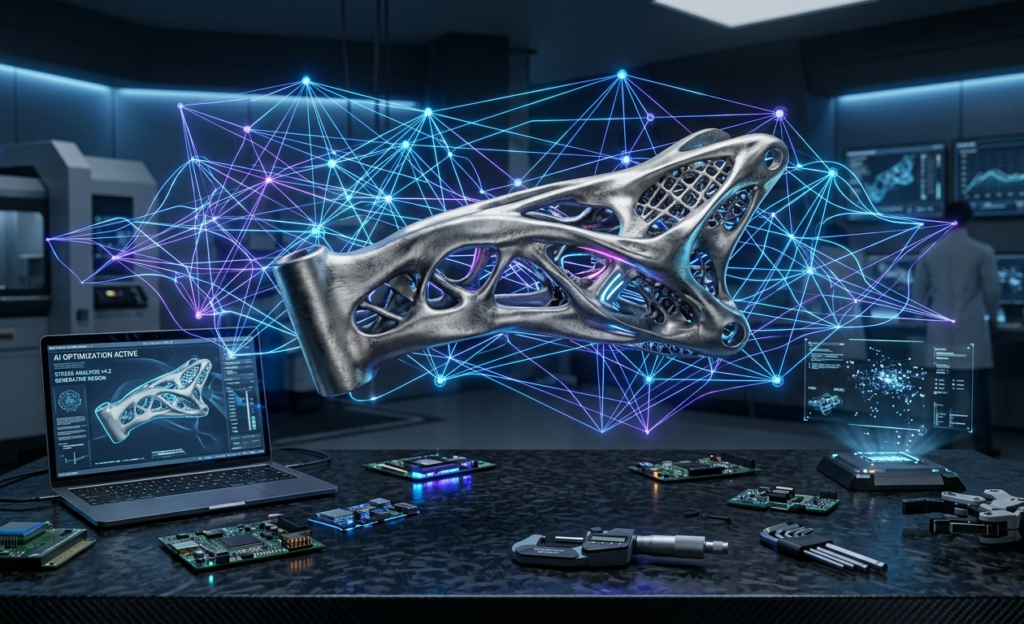
In addition to simulation, AI-driven generative design algorithms flip the traditional R&D process upside down. Instead of an engineer drawing a shape and testing to see if it holds the load, the engineer simply inputs the boundary conditions (e.g., “This bracket must hold 500 lbs, attach at these four points, and use aluminum”). The AI then iteratively generates hundreds of optimized, organic shapes that meet those exact criteria, often resulting in designs that are 40% lighter and structurally superior to anything a human could have conceptualized.
AI also boosts R&D in the physical testing phase through predictive analytics and anomaly detection. By connecting AI to sensors on a physical prototype, machine learning algorithms can detect minute vibrational or thermal patterns that precede a mechanical failure—patterns entirely invisible to the human eye. This allows R&D teams to understand exactly why and when a part will fail in the field, leading to incredibly robust product lifecycles.
The Power of Free AI in Engineering Ideation
While enterprise-level AI tools can cost millions of dollars, the democratization of artificial intelligence means that individual engineers, startups, and small R&D teams now have access to incredibly powerful, absolutely free AI models. These free tools are revolutionizing the earliest, most creative stages of R&D: brainstorming and ideation.
Free AI tools act as indefatigable, highly knowledgeable brainstorming partners that are available 24/7. When an engineer faces “blank page syndrome” at the start of a project, free large language models can instantly generate dozens of divergent conceptual approaches to a mechanical problem. They can help translate complex physical requirements into programming scripts (like Python code for data analysis), troubleshoot mathematical formulas, and provide instant summaries of complex metallurgical properties.
By lowering the barrier to entry, free AI empowers engineers to explore a much wider breadth of concepts without the constraints of an R&D budget. It allows teams to rapidly ideate, discard unviable concepts, and refine promising ideas before spending a single dollar on software licenses or physical materials. This rapid, cost-free conceptual iteration is the engine that drives a 5X acceleration in overall R&D velocity.
5 Free AI Tools to Revolutionize Your R&D Today

To immediately begin boosting your Research and Development workflows, here are five highly capable, free Artificial Intelligence tools, complete with their official links and specific engineering advantages:
1. ChatGPT (by OpenAI)
- Official Link: chatgpt.com
- Engineering Advantages: ChatGPT, utilizing its advanced language models, is the ultimate general-purpose engineering assistant. It excels at rapid brainstorming, generating initial conceptual architectures, and translating complex engineering requirements into plain language. For R&D engineers, its greatest advantage lies in its ability to write and debug Python or MATLAB code for data analysis, enabling teams to process large datasets from prototype testing in seconds. The free tier offers a massive context window for pasting in specification sheets and asking for instant comparative analysis.
2. Claude (by Anthropic)
- Official Link: claude.ai
- Engineering Advantages: Claude is renowned for its exceptional handling of massive text documents and its highly nuanced, logical reasoning capabilities. In the context of R&D, Claude is the superior tool for conducting literature reviews and analyzing patents. An engineer can upload extensive PDF manuals, technical standard documents (like ISO or ASME codes), or historical failure analysis reports into Claude, and the AI will accurately retrieve specific safety thresholds, summarize findings, and ensure your new concepts comply with historical standards.
3. Perplexity AI
- Official Link: perplexity.ai
- Engineering Advantages: Unlike standard chatbots, Perplexity operates as an AI-powered conversational search engine deeply grounded in real-time web data and academic citations. For the R&D professional, this is critical. When researching novel material properties or looking for the latest breakthroughs in fluid dynamics, Perplexity will not just generate an answer; it will provide direct footnotes and links to the scientific papers, manufacturer datasheets, and academic journals it pulled the information from, ensuring the R&D foundation is based on verifiable facts, not AI hallucinations.
4. Google Gemini
- Official Link: gemini.google.com
- Engineering Advantages: Gemini’s core advantage in R&D is its deep, native multimodality. It can seamlessly understand and reason across text, code, and, most importantly, images. An engineer can upload a photograph of a fractured prototype, a screenshot of a complex schematic, or a rough hand-drawn sketch of a mechanism, and ask Gemini to analyze the failure points, explain the circuitry, or suggest improvements to the geometric layout. This visual analysis capability makes it an invaluable tool for real-world hardware troubleshooting.
5. HuggingChat (by Hugging Face)
- Official Link: huggingface.co/chat
- Engineering Advantages: HuggingChat provides free access to some of the world’s most powerful open-source models (such as Meta’s Llama or Mistral). For R&D engineers who are conscious of data privacy and open-source innovation, Hugging Face represents the cutting edge. It allows engineers to test different model architectures for specific tasks. Furthermore, the broader Hugging Face platform provides free access to pre-trained, specialized machine learning models that can be directly integrated into custom engineering scripts for tasks like computer vision in manufacturing quality control or predictive maintenance modeling.
Summary
By strategically integrating artificial intelligence into both historical engineering methodologies and modern workflows, organizations can systematically eliminate costly guesswork, dramatically accelerating everything from initial feasibility studies to final manufacturing deployments. Begin implementing these accessible, free AI platforms into your daily Research and Development cycles today to multiply your innovation speed, drastically reduce your prototyping costs, and secure a dominant position ahead of the competitive engineering curve.